Everything I Know About Butter
How to go from bogged down to Jacquemus covergirl in 3000 years.

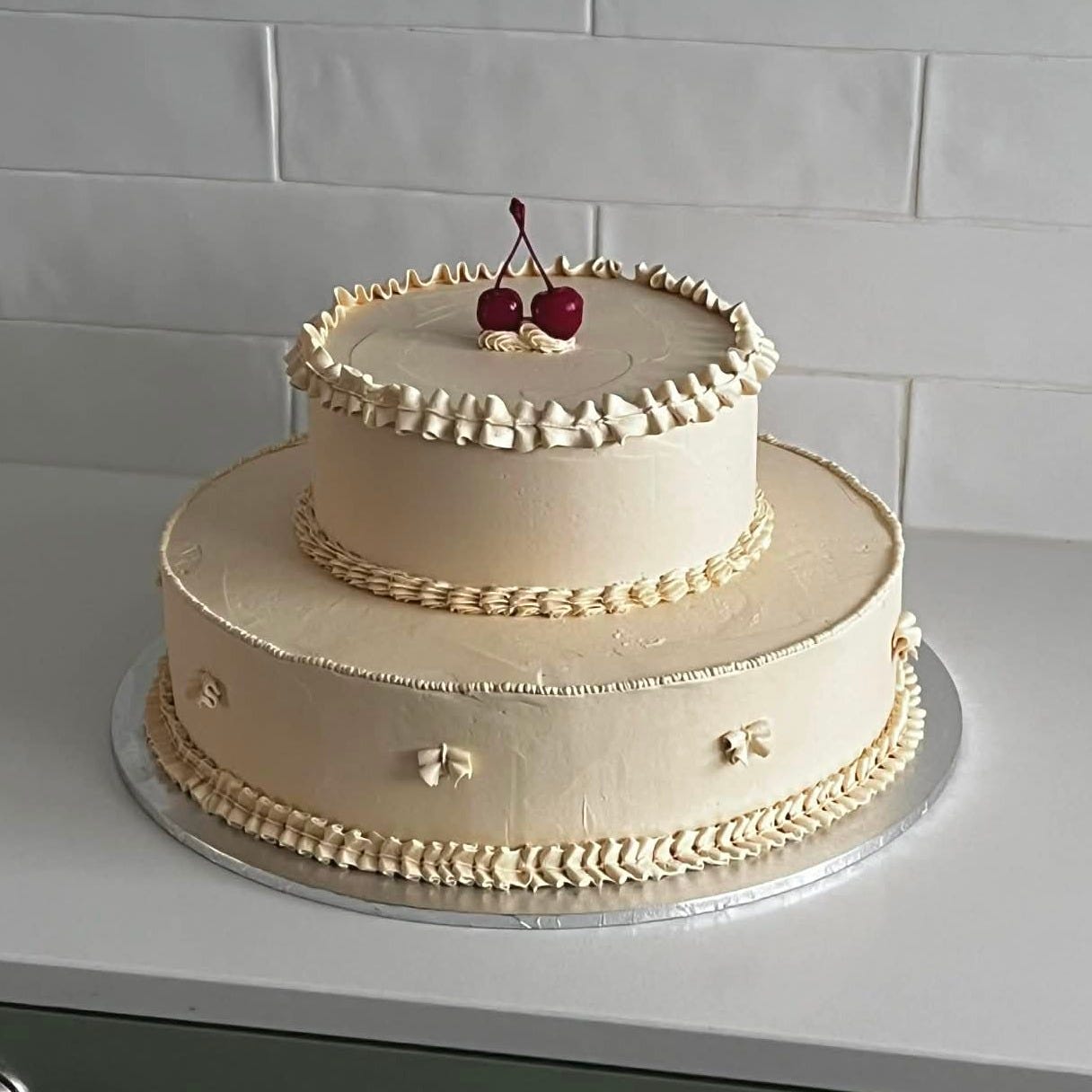
In 2024 I started selling cakes to subsidise near-tripled mortgage repayments, a post-housemate desire to live alone, a growing fragrance obsession and a small plates and orange wine habit that I wasn’t willing to break.
Bar some secret ‘babka drops’ between lockdowns, I hadn’t taken orders since 2011, after shutting shop on my cupcake venture (trendy then, heinous now) to focus on my final years of high school. I’d bake for friends and family (and later, corporate bribery) in the years to follow, declining paid orders because my favourite part was always seeing delight in the faces of people I love. I can’t do that if I’m not at the party myself.
Always testing new recipes and tinkering old, I perfected a repertoire of staples - a list of for-my-eyes only recipes that are to this day sprawled across napkins, bills, bits of cardboard box, corners of my mind and the notes app (I can be quite B for a type A). Unwilling to compromise my lifestyle, I made an instagram account, @kerri.cakery, and started saying yes to orders from strangers.
I quickly learnt not to underestimate the marketing power of a celebration (and of cake that tastes even better than it looks). Soon my cakes found a place in Vogue and as centrepieces for weddings, engagements, and shoots with some of my favourite brands. I was gobsmacked by the demand.
There is so much I could write about two years of cakedom (including the wretched task of transporting a giant cake through the city, and the lessons cake will teach you in human nature), but I really just came here to write a love letter to butter.
I don’t know how many kilograms of butter I’ve whipped, spread, piped and browned over the course of my lifetime, but I’m certain the collective would weigh at least triple as much as I do. At least. Quite ironic, considering I grew up terrified of the stuff. Butter was public enemy number one in the 90s and early 00s, where diet and low fat were the culinary terms du jour. The saccharine that goes in my tea every day would tell you I’m not fully healed.
A light mist of cooking spray was responsible for lubricating hot pans, and toast saw literally any other topping. Mostly peanut butter, actually; Big Peanut had a great PR team until the anaphylaxees came along. I’ve moved up in the world, but there’s really no turning back once you’ve swapped ‘butter-flavoured spread’ for the salt-flaked french type, or have tasted the savoury toastiness that happens when you let the butter brown a little before you drop your egg into the pan.
The reason I love baking (and beauty, for that matter) comes down to transformation. Goopy, translucent egg whites into opaque, pillowy meringue. Liquid batter into bouncy sponge. Tearing apart the glutenous networks that form inside a rising ball of dough. It’s science, sure, but it’s also magic. I feel so silly for ever underestimating the transformational potential of butter.
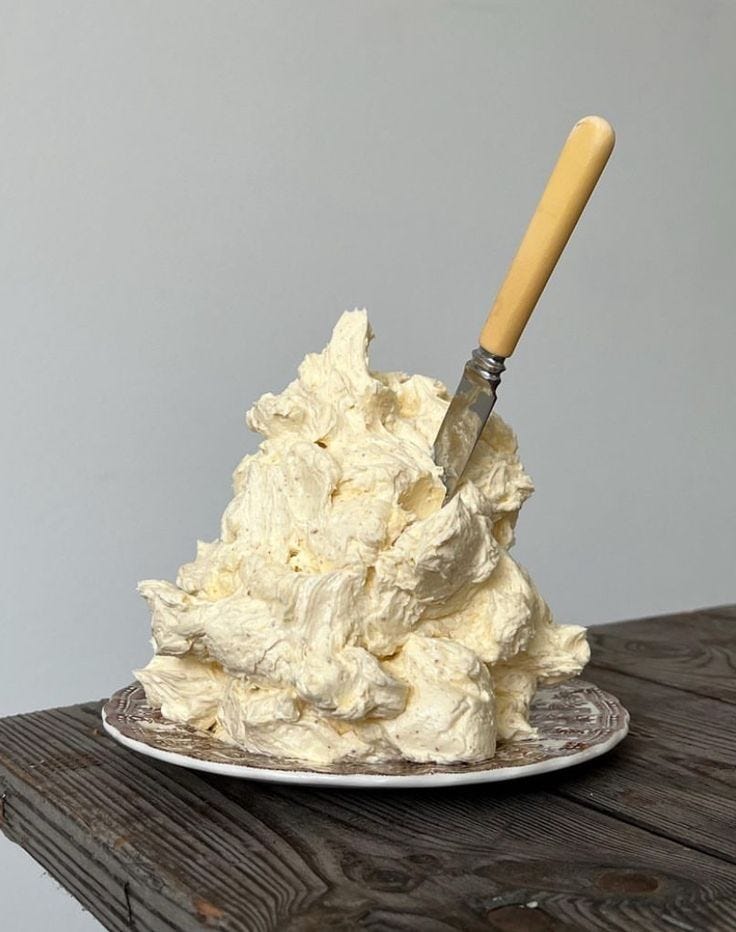
Butter has transitioned from an Irish survival staple buried in swamps to a luxury item that loons like me are smuggling across borders in their carry-on. It’s come so far from public detest, to the point of aesthetic convention for the world’s most loved fashion and beauty brands. And its history is wild.
1000 BCE (approx.): Ancient Irish and Scottish people begin burying ‘bog butter’ (butter packed into wooden kegs) - some for cool, low-oxygen preservation, and others as a godly offering. I wonder if the big man takes it salted and whipped on house sourdough a la CPH’s Apollo Bar. Archaeologists still find bog butter today.
Over in the Med: Greeks and Romans shun butter as “barbaric”. I know someone who still does tbh, pretty sure they read my substack (and if so, hi). Instead, they’d primarily use it as skincare (more on that later).
Ancient Norway: Butter becomes so universally valued that it is used by landowners as a form of legal tender for paying taxes. I would be so rich.
15th C: The Catholic Church bans butter during Lent, leading wealthy citizens to pay for ‘butter dispensations’ (a permit allowing them to consume butter) that eventually fund the aptly named Tour de Beurre (Butter Tower) of Rouen Cathedral.
Through the renaissance: Folkloric ‘butter witches’ are blamed for stealing local dairy farmers’ cream by way of magic. There’s a theory that witches would disguise themselves as winged insects to steal butter, leading to the nickname buttervogel (butter-birds) or ‘butterflies’. I was once at a butter and cheese making class, and the wench leading it (I’m not being crass, she identified as a literal wench) called me a witch for how fast my butter and buttermilk separated. Not news, but still titillating none the less.
1700s: The Cork Butter Market in Ireland establishes itself as the world’s largest exchange, creating the first global quality brand for exported dairy (it’s now a butter museum).
1869: Napoleon III commissions chemist Hippolyte Mège-Mouriès to create margarine as a cheap alternative for the French military. This sparks a century-long butter vs marg war, leading to intense lobbying and even laws in some U.S. states that forced margarine to be dyed pink so it wouldn’t be mistaken for the real thing.
1970s: An astronomically large surplus of butter is accumulated in the EU due to government hoopla and overproduction, and is named ‘Butter Mountain’. The stock - over 1.2 million tonnes of the stuff - takes over a decade to get through. Now that’s a slippery slope.
2011: Norway experiences “smør-panik” (butter panic) as a national shortage causes prices to skyrocket. Butter was sold on the local black market for around 90 AUD a kilo.
2017: Butter Mountain is depleted, shifting the European butter market from surplus to shortage.
2020s: In March 2020, Summer Fridays launch their Lip Butter Balm, which - following repackaging and reformulation - becomes a #1 bestseller in beauty retailers globally. It sparks an obsession for butter textures in beauty formulas (rhode follow suit with their Barrier Butter Balm), and butter visuals in beauty and fashion marketing; because yes, you can emboss some butter and toast and call it an invitation, or so says Jacquemus. [More on this from Elizabeth Godspeed]. There was also that whole ‘butter board’ thing on TikTok, but I couldn’t bring myself to get around it.
Present day: The French are the highest global butter consumers, with an intake around 8kg per person per year. But don’t let that number gross you out - it equates to just short of one croissant per person per day. And because they’ve got enough already, travellers in France are vacuum-sealing artisanal butters like Le Beurre Bordier to bring it home as a culinary souvenir. Ideal if you’re returning to another European city or somewhere in the US… not so much if your final designation is in Australia.
Which brings us to yesterday. I had the joy of partaking in Cake Picnic, the global, travelling, community caking event started by the very lovely Elisa Sunga, brought to Melbourne as part of the Melbourne Food and Wine Festival. This time last year, I was writing about the viral San Francisco event - it had been a year since commercialising my cakes, and I was feeling disheartened by how common it was for people to buy cake, instead of making it themselves (everything is existential to me). The way the event brought people together over their labours of love, en mass, restored my faith.
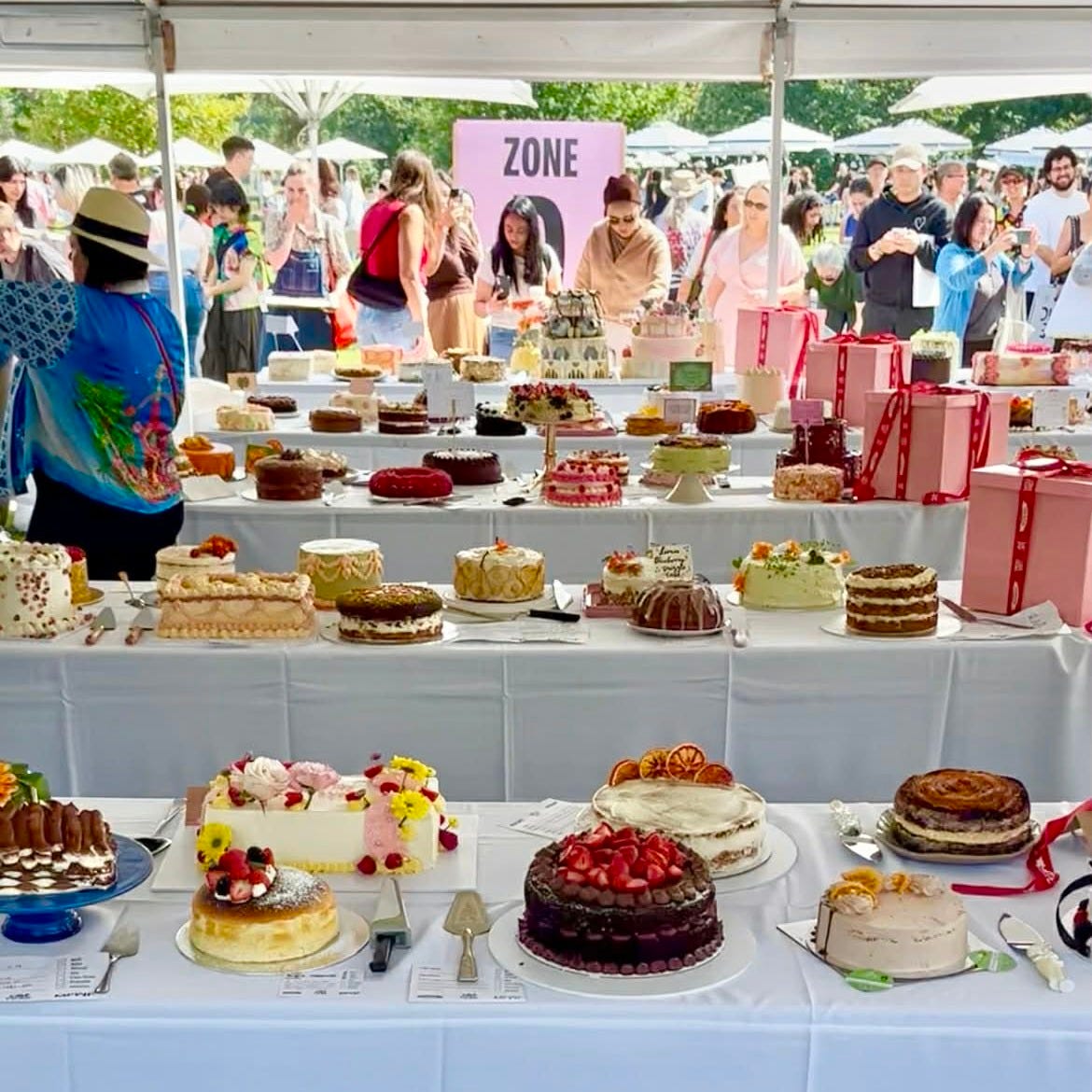
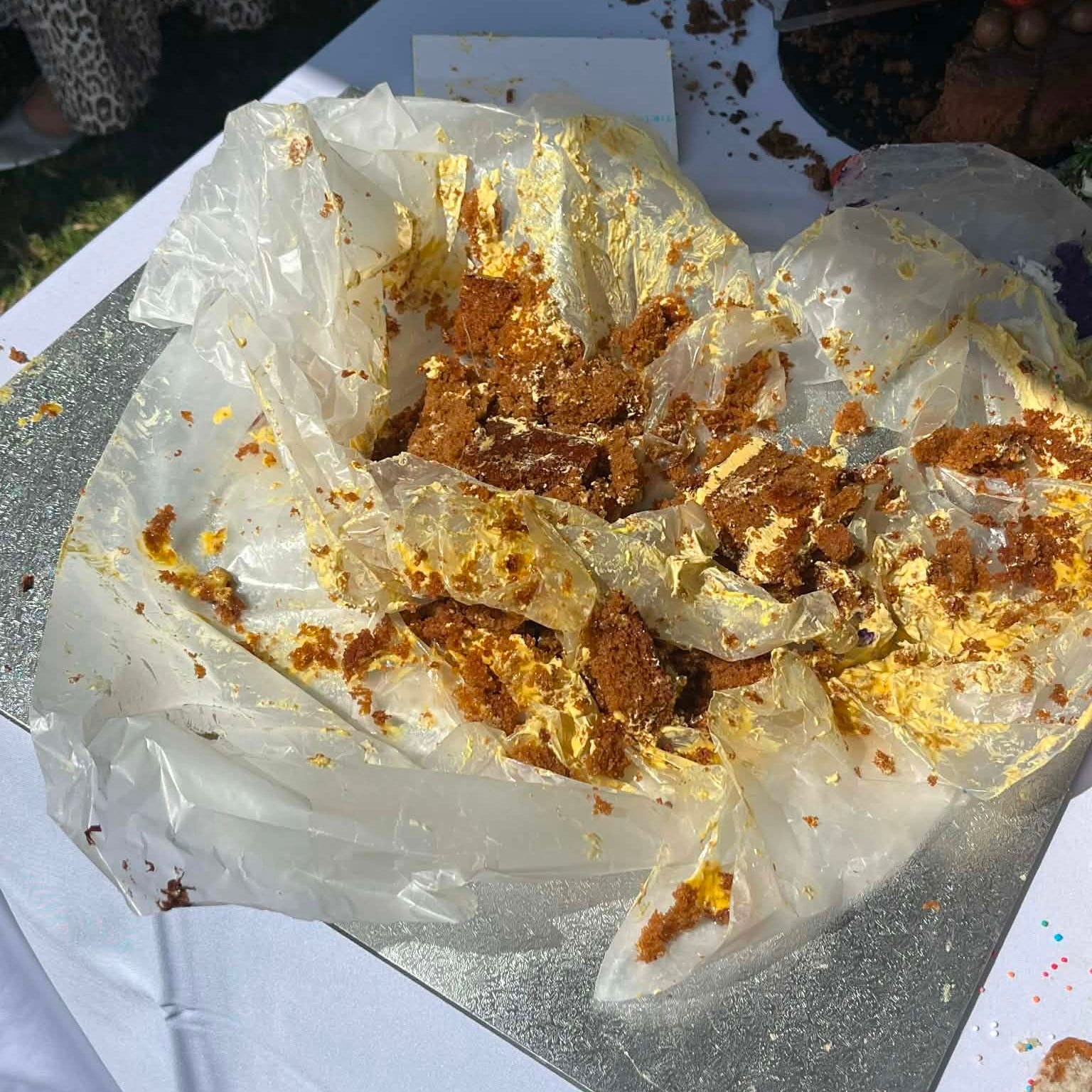
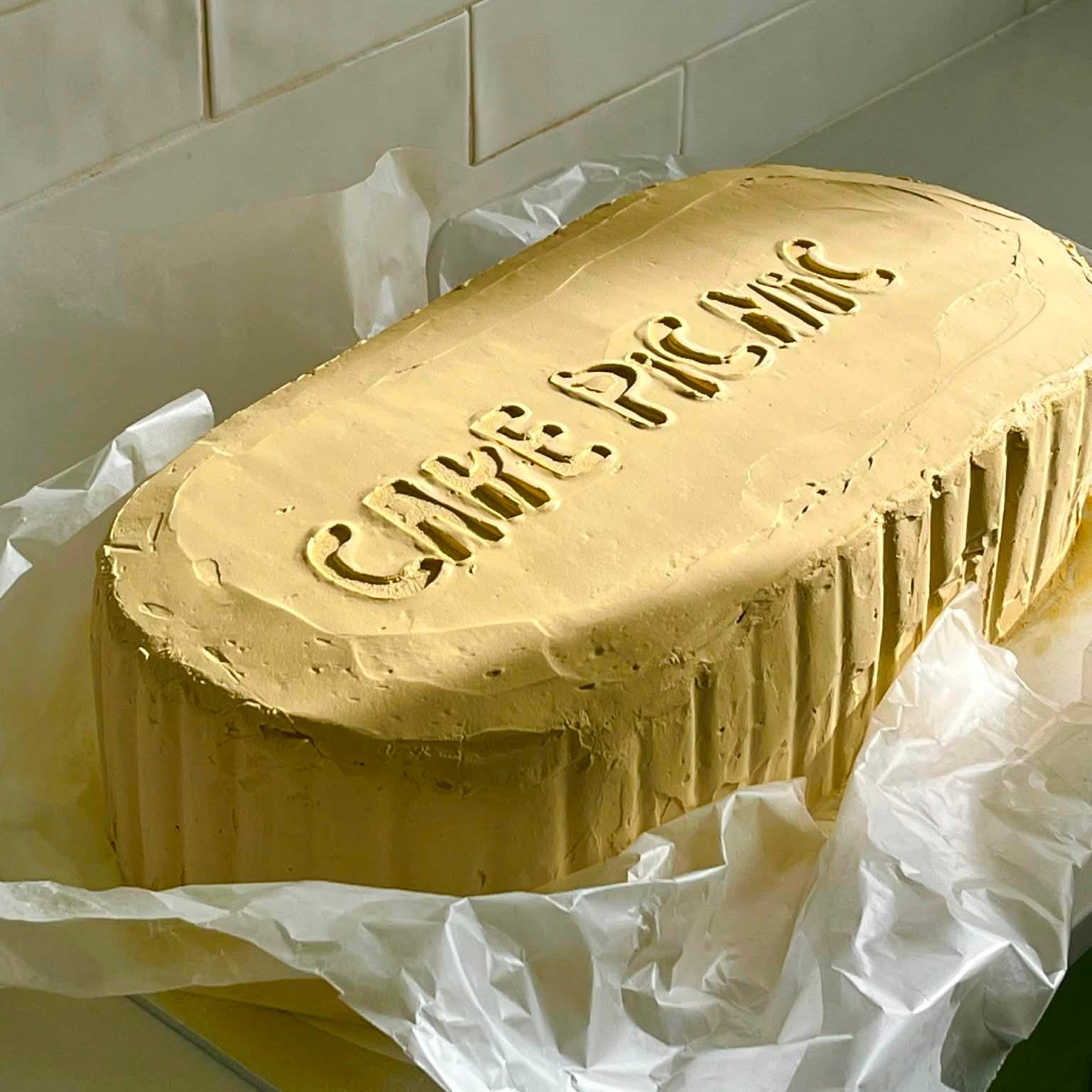
In that post, I had said “I just hope all that buttercream didn’t melt in the sun.” A year on, I was still hoping. In planning for the event, all I could think about was how many hundreds of kilos of butter would be required across all attendees (my guess is around two tonnes). And then, being Melbourne in March, how crushing it would be to see all those perfectly frosting cakes melting into obscurity. And so I landed on the “Butter” cake. A cake that pays homage to the creative direction of current day beauty standards, to the French artisans who have created an epicurean attraction to rival the Eiffel Tower, to the mountains of butter that bring the event to life, and to the likelihood of a melted cake, in which mine would look the part.
The cake itself was a toasted honey, tea and brown sugar cake, with a salted biscuit Swiss meringue buttercream. Derived from an old Rosh Hashanah (Jewish New Year) honey cake recipe, it’s a cake I have spent three years perfecting - the voice in my head going; ‘what if we pop a tea bag in the boiling water?’ and ‘what if we caramelise the honey first?’, or ‘what if we swap white sugar for dark brown?’.
I’m a firm believer that creating sweet smells in your home brings infinitely more joy into your life (if you’re witchy like me, you’ll know it’s a good omen to bake after saging). In Judaism, honey symbolises hope for a sweet year ahead. Add a schmear of butter and you’re living.